
The best-case scenario -- to which Morgan Stanley attaches 30 per cent probability -- pegs the S&P BSE Sensex at 41,500 levels in the next 12 months.

India is facing a challenging situation, where growth rate has slowed down significantly, yet inflation levels remain high. Early revision of policy rates would raise the risk of renewed currency depreciation pressures.

India, along with Southeast Asian countries such as Indonesia, is expected to sustain growth in the medium-term in Asia region, replacing China as the key growth driver, Morgan Stanley and Nomura said in two separate reports released on Monday. While Morgan Stanley projected a 6.2 per cent gross domestic product (GDP) growth forecast for India in FY24, Nomura estimated the Indian economy to grow at 5.9 per cent in 2023. "Even with a slowing China, we expect GDP growth in Asia to sustainably outperform other emerging markets and the US. India and Southeast Asia are set to be the fastest-growing economies this decade.

The report said in the recent months policy makers as well as the private sector have made some efforts to improve productivity.

Very gradual fiscal consolidation glide path with looser-than-expected fiscal policy; good quality spending mix and reasonable assumption on fiscal math; and focus on privatisation, asset monetisation and long-term funding for infrastructure investments, according to Morgan Stanley, are the three key themes from the Budget 2021.

Strong performance in the beauty and personal care (BPC) segment, margin gains, and expectations of a breakeven in the fashion business lifted sentiment for FSN E-Commerce Ventures (Nykaa). The consumer technology platform's stock rose 7.5 per cent on Friday, extending gains over the past week to more than 17 per cent. Most brokerages have upgraded the stock following its third-quarter (October-December/Q3) performance and higher profit expectations ahead.

The general elections in April/May 2024 are expected to add volatility to the Indian markets, keeping investors on their toes.

GST Reform 2.0, which trims tax slabs from four to two, signals a push for demand-led growth, and together with recent income tax cuts, sets the stage for sustained economic growth, experts said. The Goods and Services Tax (GST) Council on September 3 approved an overhaul of the indirect tax regime by taxing essentials at 5 per cent and other goods at 18 per cent. A new 40 per cent tax will be applicable on luxury and sin items.

Indian equity markets have a limited upside potential in the near-term as they negotiate the ensuing cyclical slowdown, wrote analysts at Nomura in a recent coauthored report led by Saion Mukherjee, their managing director and head of equity research for India. He, however, believes that the foundations are in place for sustainable growth over the medium-to-long term, and hence suggests a 'buy on dips' strategy to equity investors. As an investment strategy, Nomura prefers domestic-oriented sectors and companies over exporters, and prefers stocks that provide valuation comfort. Industrials and banks are their overweight sectors, while IT services and consumer discretionary are their underweight sectors.

Coalition governments aren't necessarily a negative for the economy, though they can result in negative outcomes in the stock market if not already priced in before elections.

In terms of magnitude of rate cuts, Morgan Stanley expects 50-100 basis points of policy rate cuts in 2015, depending on the inflation trajectory, which in turn will be dependent on the trend in commodity prices, fiscal deficit and rural wage growth.
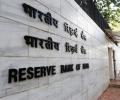
The central bank's next monetary policy review is scheduled for April 5. It had kept the policy rate unchanged in its February meeting on fears of inflation.

Portfolio returns, say analysts at Morgan Stanley, are more likely to be driven by bottom-up stock-picking rather than top-down macro forces.

China spends seven times more on infrastructure than India.
China spends seven times more on infrastructure than India.
Indian stock markets have developed a resilience to political hurdles, reforms and have aligned to global cues which decide the direction of their movement, a report by a leading investment bank has said.

The markets are in bubble territory.
For every 2.5 degree celsius rise in global temperature, the damage to India is predicted to be 4.9 per cent of the gross domestic product, highest for any country, according to a key finding of a research by global financial services firm Morgan Stanley.

Morgan Stanley expects RBI to cut rates sharply rather than "dribble down".

Sensex has lost almost 1,500 points since December 31, 2014.

Indian equity markets had a good run in the first half of calendar year 2023 (CY23), with the S&P BSE Sensex and the National Stock Exchange Nifty50 hitting fresh 52-week highs. While the Sensex scaled up to a peak 64,718, the Nifty50 hit Mt 19,189. As the markets now prepare to enter the second half (H2) of CY23, all eyes are on global central banks, especially the US Federal Reserve, as to when they will pause and pivot as regards their interest-rate cycle.

Sharma is Head of Emerging Markets and Chief Global Strategist at Morgan Stanley Investment Management.

'Experts are not ruling out further pain as global factors cannot insulate India from the aftermath.'

A fall in crude oil price and Aramco's $75 billion annual dividend commitment may have delayed Saudi company picking a stake in Reliance Industries Ltd's oil-to-chemical unit (O2C), research firm Jefferies said. Richest Indian Mukesh Ambani had in August 2019 announced talks for the sale of a 20 per cent stake in the O2C business, which comprises its twin oil refineries at Jamnagar in Gujarat and petrochemical assets, to the world's largest oil exporter. The deal was to conclude by March 2020 but has been delayed for reasons not disclosed by either company.

Morgan Stanley writing down its investment in the e-commerce leader by 27 per cent does not augur well for the sector.

India's macroeconomic environment is improving, but it is still not past the point where it can ignore the developments in the global markets

Reliance announced energy asset sales worth around $ 16 billion; end of the investment cycle in telecom; bringing net-debt to zero in 18 months; value-unlocking options for real estate and financial assets; listing of telecom and retail in five years; and focus on dividends.

FMCG stocks have underperformed the market, falling 2.2 per cent so far in 2014.

Amid news of a fuel shortage in some parts of the country and wider unrest over fuel issues in the neighbourhood, an analysis of the data from international tracker globalpetrolprices.com shows that the per litre price of petrol is higher in India than in seven out of its nine neighbours.

Analysts caution a non-BJP government is not an impossible scenario. In case of a Modi-led coalition, they advise investors to focus on discretionary consumption, select private banks and financials, RIL, housing, and IT.

'India is the largest stomping ground in the world for impact investing as we have an extraordinary combination of entrepreneurial drive with huge, absolute demand for all kinds of social services,' IDFC First Bank's chief Rajiv Lall tells Anjuli Bhargava.

As markets complete the first half of the calendar year 2022 (CY22) with a fall of around 9 per cent, the interest-rate hike trajectory by global central banks, paired with the conundrum of inflation and growth, will move the needle for the market, observe experts. Here's a quick rundown on what they'll react to over the next six months.

Does the rally reflect expectations of improving fundamentals or they are likely to correct?

Half of the sharp rise in stocks in 2014 was driven by re-ratings - rise in price-to-earning ratios on hopes the new government would turn around the economy which will reflect in corporate earnings.

Companies shipping to Europe to see rupee revenues coming under pressure.

Dollar's strength and falling crude oil prices force downward revision of 2015 growth forecast.

Wonder why corporate India is showering dividends?

In Q1, India's GDP shrank by a staggering 24 per cent year-on-year amid the imposition of one of the most stringent global nationwide lockdowns.

'Yet the market didn't do all that badly because it was cushioned by domestic inflows.'

The trip was more about understanding the Indian market, but was also about signaling to the world that Apple has arrived in India
 © 2026 Rediff.com - Advertise with us - Disclaimer - Privacy Policy - Sitemap - Feedback - About us - Terms of use - Grievances